
Every winemaker knows where their wine is today. The lot number, the vessel, the location. That part is solved. Most software handles it.
The harder question: which barrels went into this wine, and what did each one contribute? Pull back from a single lot to a complex red blend assembled from a dozen barrels across two vintages, and the picture gets murky fast. You can account for the current state. The history of influence is another problem entirely.
Part of that problem is data, and part of it is access. The data technically exists — it is in your logs, your work orders, your transfer records — but most systems are snapshots. They tell you where things are now. To figure out which barrels actually touched a given lot, you are compiling the answer yourself. That is not a workflow. That is archaeology. And the more complex the blend, the more time it takes.
The Oak Profile in Blended is built to close that gap.
Starting with vessels, the Oak Profile layers in tables, tags, and full barrel history to give you a complete picture of oak contribution across a blend. You can see, at a glance, which barrels touched a given lot, what those barrels carried before, the toast levels, cooperage origins, fill counts, and how long each vessel was in contact with the wine. It is not a report you generate on demand. It is a live view that updates with your data.

Why does this matter? Oak is not just a texture note. It is a cost, a decision point, and a quality variable that accumulates across a wine's life. A barrel going into its third fill on a Pinot is doing something fundamentally different from a new French oak barrel in a flagship Cab. If you cannot visualize the distribution of those variables across a blend, you are making decisions from memory and intuition rather than data. That is often fine. It is not repeatable, not documentable, and not scalable.
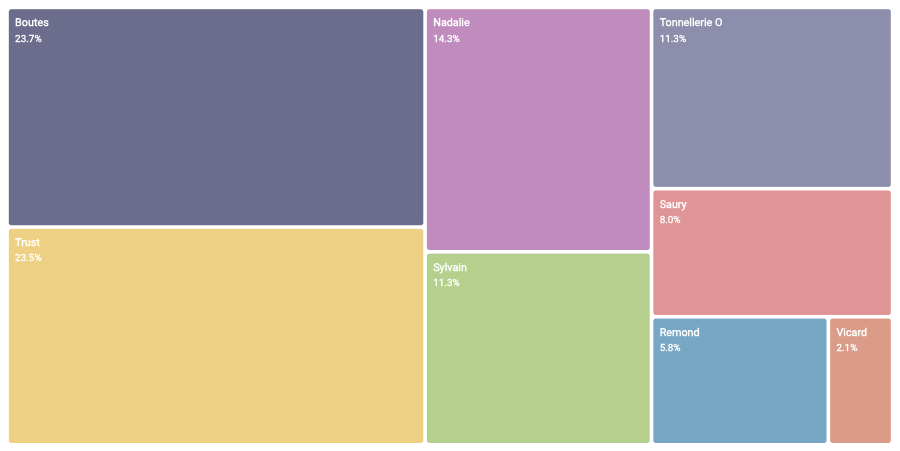
The tagging system is what makes this work at scale. Tag barrels by cooperage, origin, toast, fill count, or any custom attribute your cellar uses. Those tags become filterable dimensions inside the Oak Profile, so when you are evaluating a blend and trying to understand why the 2023 Reserve tastes the way it does, you can slice the barrel history by any combination of attributes and see it. Not export it to a spreadsheet and reconstruct it. See it.

Winemaking data is siloed by nature. The knowledge about a blend lives with the cellar team that built it, and that's a problem on its own. It becomes acute the moment a different part of the winery needs that information. Picture a hospitality staff member in the tasting room, months or years after a wine was bottled, with a customer asking about the barrel program behind it. The cellar crew who assembled that blend may have moved on. The barrels themselves have been refilled, repurposed, or retired. Even with software, reconstructing which vessels touched a given lot means digging through transfer logs, work orders, and cellar notes to compile the answers by hand. For a complex blend, that is hours of work.
With Blended, the Oak Profile does not disappear when a wine moves on. It stays attached to the lot as a finalized record — which barrels contributed, what they carried, how long they were in contact — accessible to anyone at the winery who needs it, not just the people who were in the cellar when it happened. That is what makes barrel data actually useful across an organization, rather than knowledge that lives in one department and goes dark everywhere else.
Blended has always been built on the idea that winemaking data should be dynamic. The Oak Profile is what that looks like for barrel management in practice.

.webp)